
What the Soweto workshop needed sorted
The client was a busy sticker and label shop in Soweto serving local businesses, schools, spaza shops and event teams. Their main problem was not a lack of work, it was the time lost between receiving artwork, preparing cut paths, nesting sheets and sending jobs to the cutter. Different staff were handling different steps, which meant file settings changed from one job to the next and the output was never quite consistent.
The brief was clear: build a production workflow that could handle contour cutting, sheet nesting and day to day RIP work without wasting vinyl or running into reprints. They also wanted a simple process that new staff could learn quickly, because turnover in a small production room can be high and there is not always time for long handovers.
- Job type: sticker production and label finishing
- Location: Soweto, Johannesburg
- Main need: contour cutting, nesting and queue control
- Users: design staff, cutter operator and production supervisor
Constraints on the floor and in the file room
The workshop had limited space, mixed experience levels on the machine side, and a lot of short notice jobs. During load-shedding they needed to know exactly where a job was in the queue so they could resume without mixing up cut files. They also had to work with different vinyl widths, some supplied by clients and some bought in bulk, so the nesting rules had to suit more than one material size.
We also had to factor in practical issues that come up in Johannesburg production rooms: dust around cutters, staff sharing one workstation, and the need to keep the colour and cut settings stable from day to day. If a file was prepared badly, the cutter would happily follow it and waste material, so the setup had to reduce operator error, not just make the screen look neat.
- Material widths: 610 mm and 1 220 mm vinyl
- Typical runs: short sticker batches and repeat label work
- Risk points: power interruptions, mixed staff skill, file naming confusion
- Operating need: repeatable setup with simple handover steps
What we supplied and configured
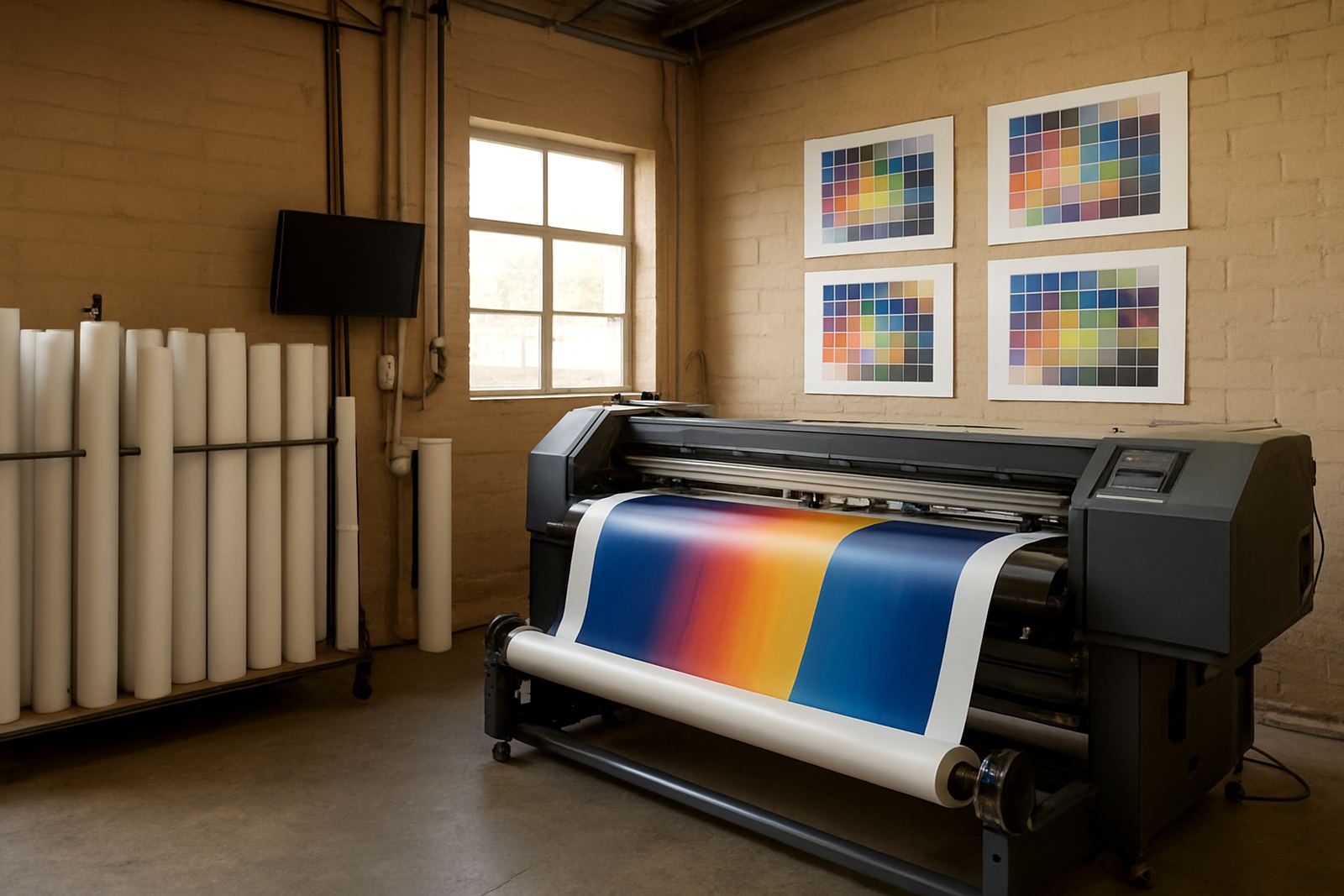
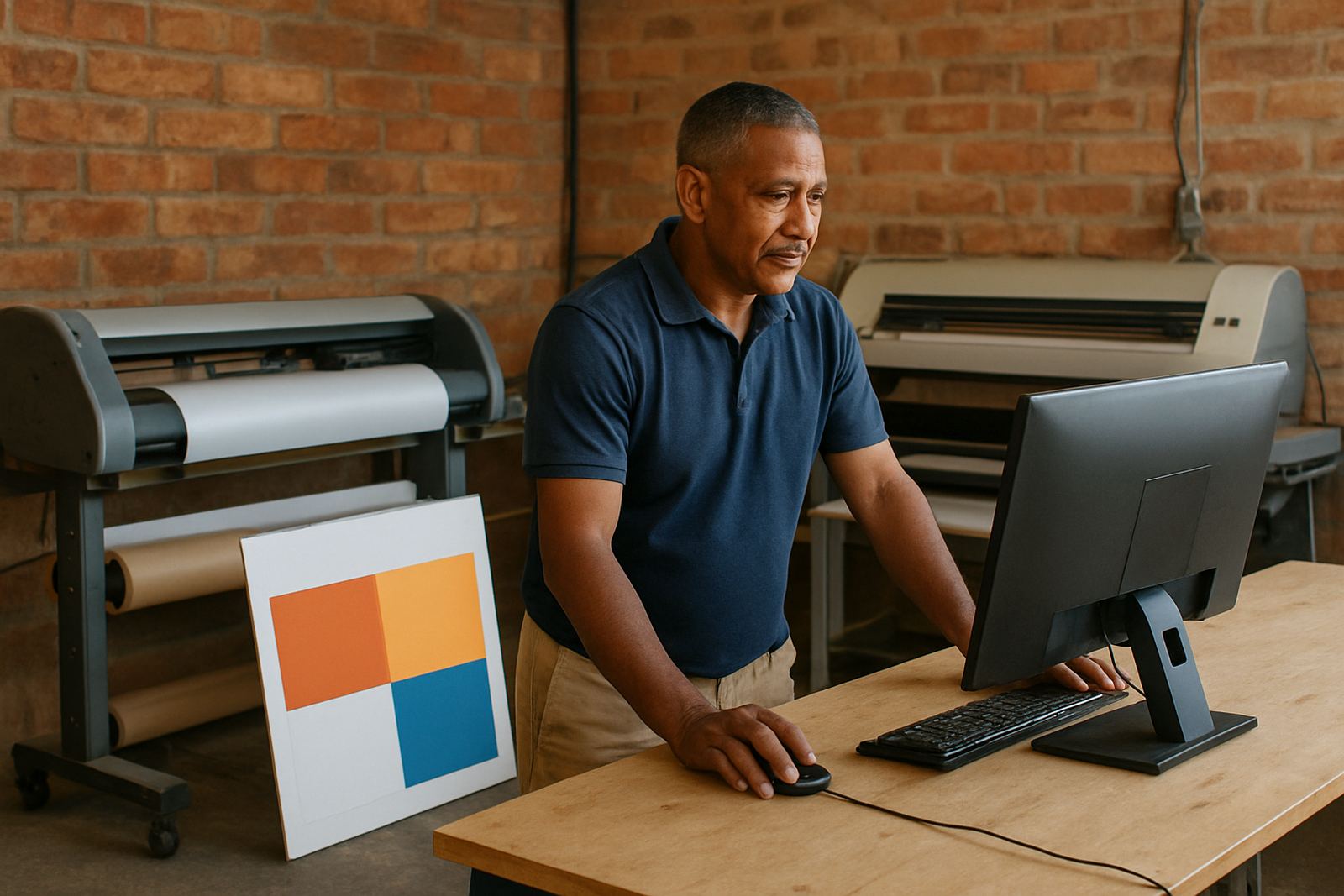
We supplied software installation, licence activation, cutter setup help and workflow setup for the production line. The RIP queue was organised so incoming jobs could be checked, nested and released in order. We set up contour cutting behaviour, job naming rules, and file preparation steps for both single stickers and full sheets. Colour management was also adjusted so reprints matched previous work more closely, which mattered for branded sticker packs and repeated municipal style notices.
Our team worked through the full chain from design to output. Mandla Jacob Maseko led the site discussion, Nadia Blignaut handled the software sales side, Luthando Mlambo carried out the installation work, Sifiso Mabena led the training, Liezel Barnard handled support follow-up, and Lungile Ndlovu checked the colour workflow. The point was to get the staff using one process, not six slightly different versions.
- Installation of sign-making design and RIP software
- Licence activation and first-run checks
- Contour cut setup and cut path review
- Sheet nesting rules for better vinyl use
- Colour workflow adjustment for repeat jobs
Training the cutters and the office team
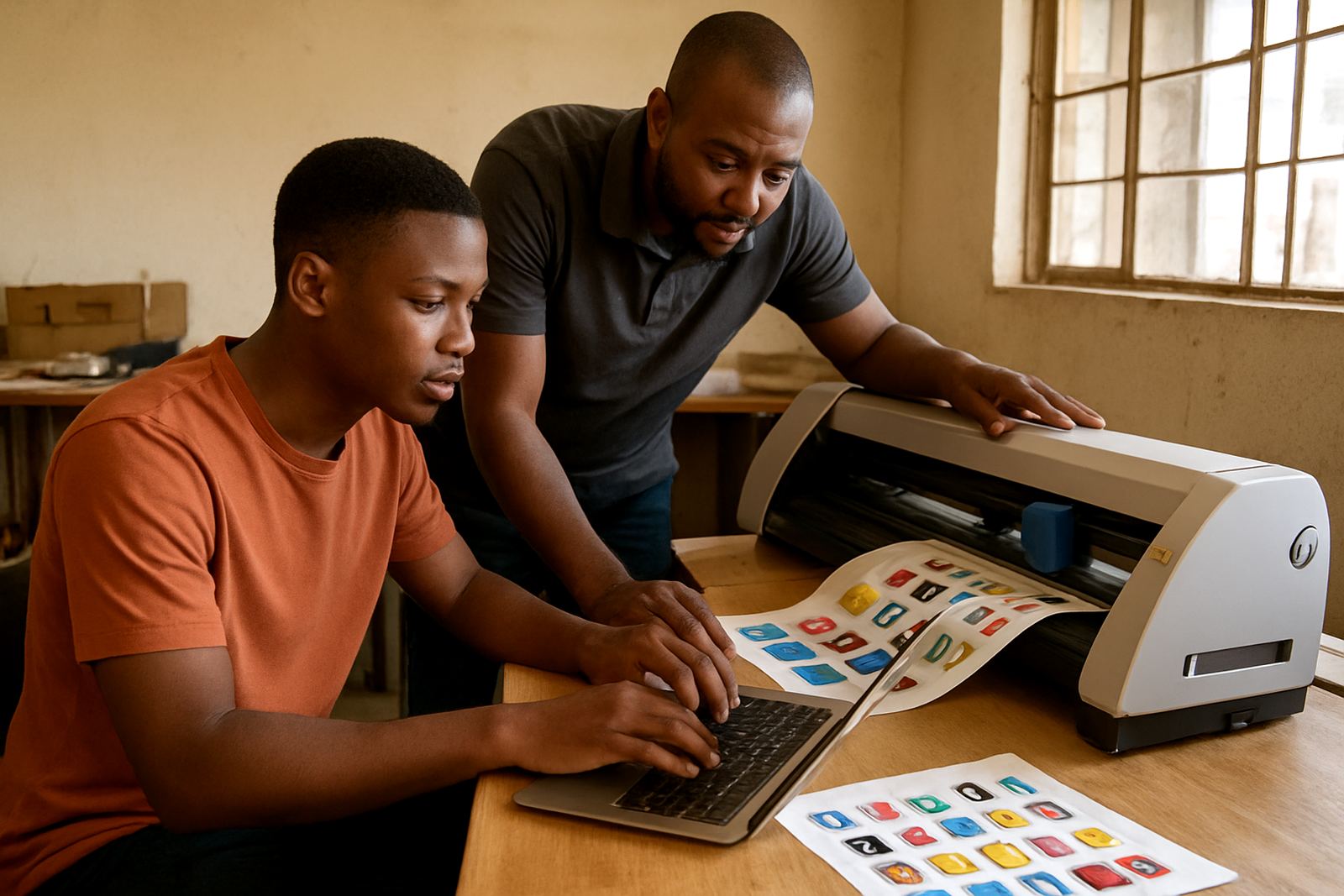
Training was split across two sessions over the course of one week, then a follow-up remote support check in week two. The first session covered file prep, cut marks, nesting and queue management. The second session focused on practical production examples using actual customer jobs, so the team could see how small changes in artwork affect output. That made the learning stick much better than a general software overview.
We also showed the staff how to handle common mistakes before they became wasted material. That included checking vector paths, avoiding duplicate cut lines, keeping text converted properly, and confirming the cutter origin before sending a new sheet. One small mistake on setup can cost a full roll of vinyl, so the training was hands on and direct.
- Week 1: installation, settings and operator training
- Week 2: follow-up support and queue adjustments
- Topics: nesting, contour cut marks, cutter origin, repeat jobs
- Extra focus: new staff induction and practical troubleshooting
Results after the new process settled in
Once the workflow was in place, the shop reduced wasted vinyl and spent less time reworking bad jobs. The team could group similar orders together, nest sheets more sensibly, and send jobs through the cutter with fewer interruptions. The production room felt calmer, because people knew where each job sat and what settings to use for the next run.
Another useful result was consistency. Repeat sticker orders now came out closer to the previous batch, which saved time on approvals and reprints. The client also had a clearer path for new staff induction, since the setup and the process notes were built around their own work habits. For a sticker shop in Soweto, that kind of structure makes a real difference when orders arrive in bursts and deadlines are tight.
From a practical point of view, the setup also made future support easier. If they later add another cutter, move to wider vinyl, or bring in more branded label work, the same process can be extended instead of rebuilt from scratch. That is important when a workshop needs to grow without stopping production.
What we would put in place again for a similar sticker shop
For a sticker producer with mixed order sizes and a small team, we would follow the same approach again: assess the cutter workflow first, organise the RIP queue second, and train the operators on real jobs not theory. That order matters because the best software setup only helps if the staff can use it under pressure, during a busy Friday or after a power cut.
We would also repeat the same support structure, with onsite setup first and remote follow-up once the team has worked through a few live jobs. That gives enough time to catch the little things, like naming habits, nesting preferences, or an operator who keeps skipping a step when the queue gets long. In a production room, those details are usually the difference between smooth output and a stack of rework.
- Start with the cutter workflow, then build the RIP routine
- Train on live sample jobs from the client’s own queue
- Leave written steps for staff who join later
- Plan for power cuts and restart points from the beginning
Key facts
| Project location | Soweto, Johannesburg |
|---|---|
| Client type | Sticker and label production workshop |
| Timeline | 2 weeks with onsite setup and remote follow-up |
| Core focus | Contour cutting and sheet nesting |
| Key software tasks | Installation, activation, queue setup and colour workflow |
| Services used | Workflow Setup, Cutter Setup Help, Onsite Training, Remote Support, Colour Management |