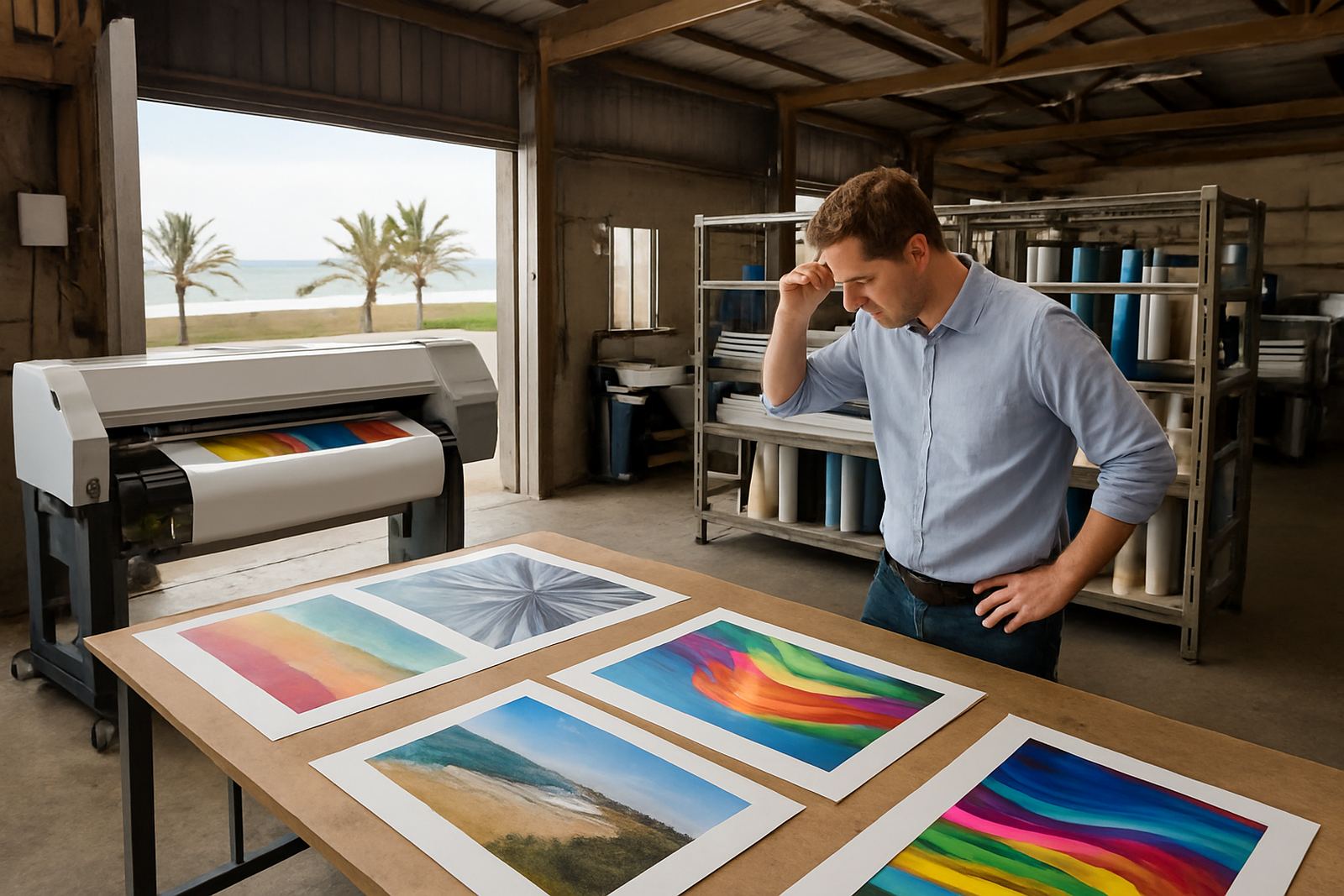


Midrand visits for active production floors
Midrand is a busy middle ground for sign shops, print rooms and production teams that work across Gauteng. We visit businesses in and around the area for software consultations, workflow reviews and setup help that can be completed on site without disrupting the full day. Whether the team is handling vinyl cutting, print and cut work, vehicle graphics or short run signage, we look at how the software is being used in real production conditions.
Typical visits suit companies that need a faster way to prepare files, improve cutter output or sort out RIP settings after an upgrade. We also help teams that are bringing in new staff and need a proper induction on the tools they use every day. Many Midrand clients operate in industrial parks, warehouse units and mixed commercial spaces where time is tight and machines need to keep moving. A short visit can save a lot of rework later.
Because Midrand sits between Johannesburg and Pretoria, it is a useful area for businesses that need support without waiting for a long travel schedule. That makes it a practical stop for production managers, owners and operators who want a clear plan for their software and colour workflow.
What we cover during a Midrand visit
On site, we focus on the parts of your process that affect output quality, speed and repeatability. We do not arrive with vague suggestions. We check how files are prepared, how jobs are queued, how the cutter is receiving data and whether the RIP is set up to match the printers and media in use. If there are banding issues, colour shifts or slow handover between design and output, we work through the source of the problem step by step.
- Software installation and licence activation
- Remote support follow up after the visit if needed
- Onsite training for operators and supervisors
- Workflow setup for print, cut and finishing stages
- Colour management checks for indoor and outdoor work
- Cutter setup help and RIP queue optimising
- Upgrade planning for older systems or mixed setups
We also help with annual support planning where a team wants predictable assistance through the year. That can be useful for busy shops that work with deadlines, municipal signage requirements or client approvals that keep changing at short notice. A clear setup helps reduce waste and keeps the presses and cutters working with less back and forth.
Who usually calls us in Midrand
We are often called by sign makers who are handling both small and medium production runs, especially where the team is growing and the software side has started to hold things back. Print service providers in Midrand also ask us to review output paths when they are juggling design files, RIP presets and cutting workflows across several jobs at once. A common issue is that everyone knows the machine, but not all staff are using it in the same way, so jobs come out differently from shift to shift.
Midrand clients usually include:
- Sign shops producing vinyl decals, shopfront signage and exhibition graphics
- Print rooms that need better RIP control and colour consistency
- Teams adding a new cutter or upgrading older production software
- Businesses training new operators after a staff change or expansion
- Production spaces that need cleaner handover between design and finishing
We have worked with teams that need practical help for day to day work, not theory. That means looking at file naming, queues, cut paths, media profiles and who does what on the floor. It also means understanding the pressure that comes with local turnaround times. In Midrand, many jobs need to move from proof to print to install very quickly, so a tidy setup matters.
Travel, timing and turnaround for Gauteng teams
Midrand is one of the easiest areas to reach from our Randburg base, so visits are often arranged with short notice when the schedule allows. For nearby production spaces, we can usually plan consultations around operating hours to limit downtime. If a team needs support after a failed update, a cutter issue or a colour mismatch on an urgent job, we look at the quickest practical route and advise what can be handled on site versus what can be sorted remotely.
Turnaround depends on the job and the current workload, but the aim is always to get the software and workflow stable without dragging the process out. If a site needs installation plus training, we can split the work into a first visit and a follow up session. That is often better for busy shops because staff can test the changes between visits and come back with real production questions.
Load-shedding, power dips and sudden shutdowns still affect some Midrand production spaces. We factor that into the way we set up queues, backups and restart steps so that teams can recover faster after an interruption. It is a simple thing, but it saves time when the workload is heavy.
Local conditions that affect sign and print workflows
Midrand businesses often work in warehouse-style units, office parks and light industrial sites where dust, heat and mixed network setups can affect output. In some buildings, the Wi-Fi is uneven, which can interrupt job sending or licence checks. In others, the issue is not the machine at all but the way the data is moving from design to RIP to cutter. We inspect the practical side of the setup and make the process easier to manage.
For teams working with large format print, UV work or vinyl cutting, local conditions can also influence colour and finishing. Media storage, room temperature and the way jobs are nested in the RIP all play a part. On coastal humidity days the needs are different to inland winter conditions, but Midrand teams still benefit from consistent profiles and cleaner control of each job. Small changes in the workflow can make a noticeable diffrence to waste and reprints.
Where required, we explain what to watch for in municipal or client-driven signage work, especially when file standards or deadlines are strict. We keep the advice practical, so the person on the machine knows exactly what to do when the next order comes in.
How to arrange a Midrand visit
Enquiries for Midrand visits go through the contact page form. Once the request comes in, we review the site needs, the software in use and the type of support required. That helps us decide whether the job needs a simple consultation, a training session, licence activation or a wider workflow review. If the team needs several items covered in one visit, we will group the work so it makes sense for the production schedule.
We carry out visits for new installs, upgrade checks and support on existing setups. Common items covered include colour management, cutter setup help, RIP queue optimising, new staff induction and annual support planning. Some sites only need a quick review and a few corrections. Others need a full reset of the workflow so the software, cutter and print side all line up properly.
If your Midrand production space needs clearer output, tighter control and less waste, a site visit is a practical place to start. The goal is simple: get the system working the way the shop actually runs, not the way it was meant to on paper.